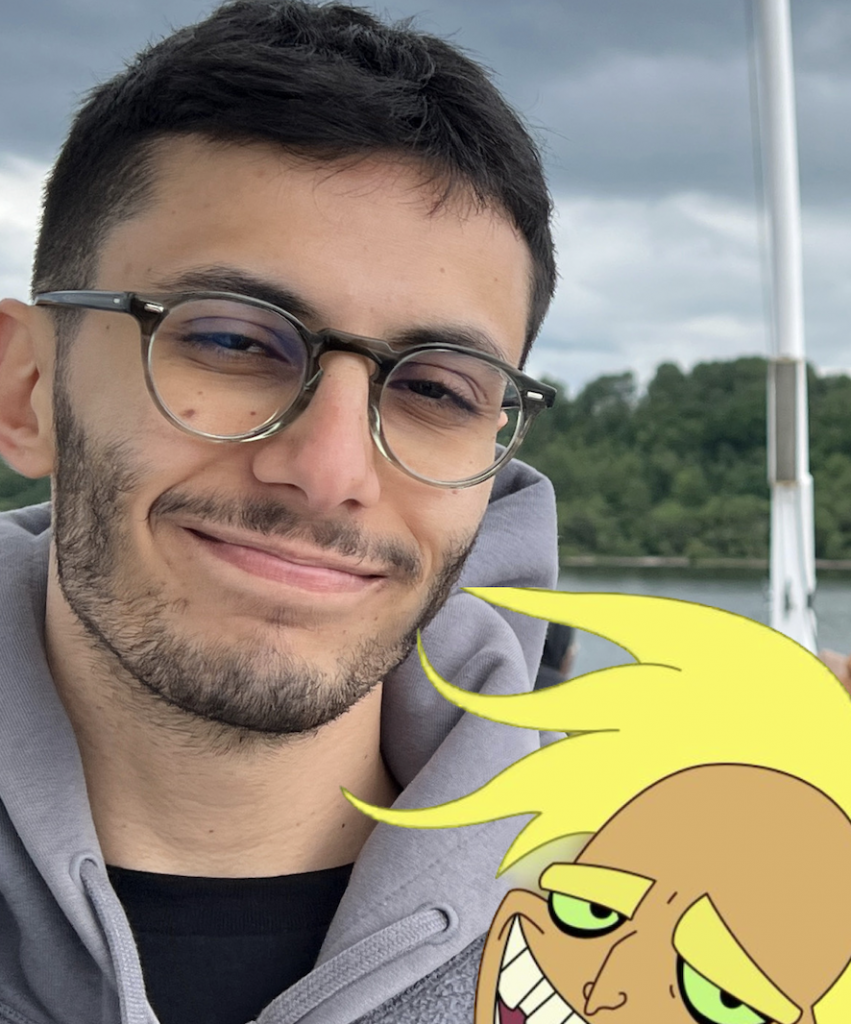
Evan Lorant, an MSc student in Digital Anthropology at University College London, or what I call him, the meme theorist, who specialises in the intersection of identity in both digital and physical spaces, was the perfect stakeholder to include in my intervention. Evan participated in the intervention and also provided feedback afterwards.
The most important thing is that Evan helped me identify the gap in my current work whilst giving me useful second-hand resources to explore. While the intervention did successfully prove that meme culture extends into the physical world through artefact, it didn’t delve deeper to explore the emotional and cultural investment that people have in these objects. While many participants did seem to have big reactions to the artefacts based on the survey results, the intervention did not allow for further exploration as to why these memes make them happy or elicit an emotion.
Based on the feedback, these are the next steps I will undertake to deepen the layer of understanding:
- Explore the core of the relationship – investigate why people form these emotional connections. Is it due to irony, identity, nostalgia, community belonging or something else?
- Investigate the consumer culture around the memes and offline artefacts. There seems to be a lot referral to the Loewe Tomato Bag, which could be indicative to the current state of how people perceive offline artefacts.
- Evan’s work successfully bridges digital and physical spaces. I would need to ground my work in a framework to understand how digital meaning materialises in the offline world and what that says about post-millennialism.
- “What does it mean that offline artefacts hold such strong but often inconspicuous ties to online culture?” – will help in guiding the next iteration of my research, shifting my focus to understanding the significance of their existence.
It is clear that there needs to be an emphasis in future interventions on creating more interactive and participatory formats where we can uncover the stakeholders’ emotional, social, and cultural relationships to offline artefacts. I also need to task myself with finding a way to integrate the stakeholders into the fibres of my research and process. Most of these topics rely on semiotics and the way we see things, and having other perspectives will only help broaden the scope of interpretation and ground the project in different lived experiences.