
Something that has poked out during the action research portion of this project is that Gen Z humor operates on context, absurdity, and irony in a way that resists traditional participation. It is something innate that comes up rather than something calculated and thought through. Postmillennials have been studied to have a deep sense of what counts as something authentic on social media, or whether it is performative humor. (Katz, R. et al. 2021, page 76). A big part of Gen Z is the emphasis on identity. “The postmillennials’ emphasis on authenticity can be understood within the context of their having grown up with the internet, which provides so many opportunities to curate and tailor your identity, to take on different personae, and even to deceive. Authenticity therefore connotes believability” (Katz, R. et al. 2021, page 76).
This leads to an intervention that did not succeed to the level that I believed it would. The intervention concept was to ask people to share meme-related items they have at home. The purpose of this intervention was to follow up on the previous journal entry of: So Many Objects, So Light Yet So Heavy.
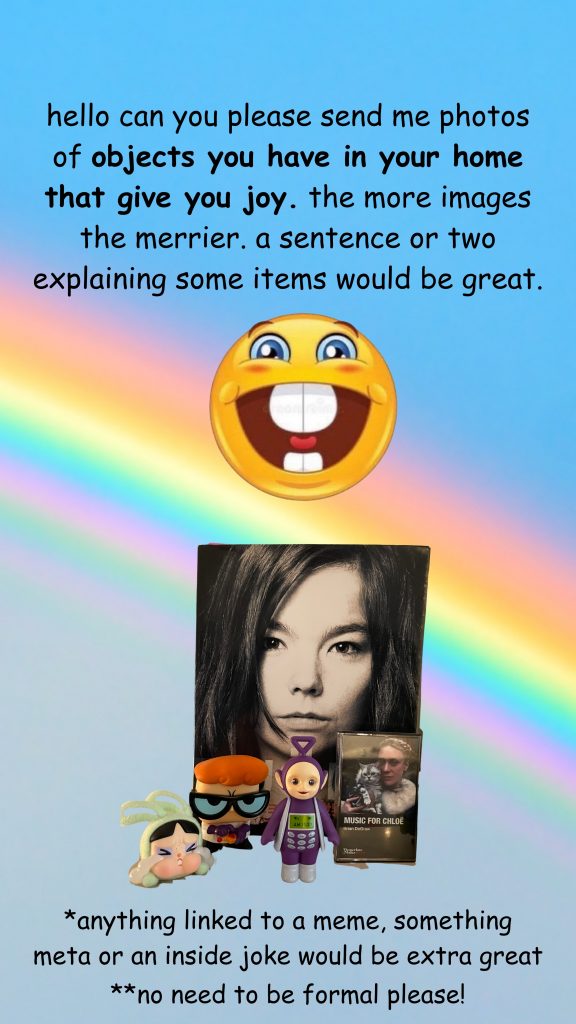
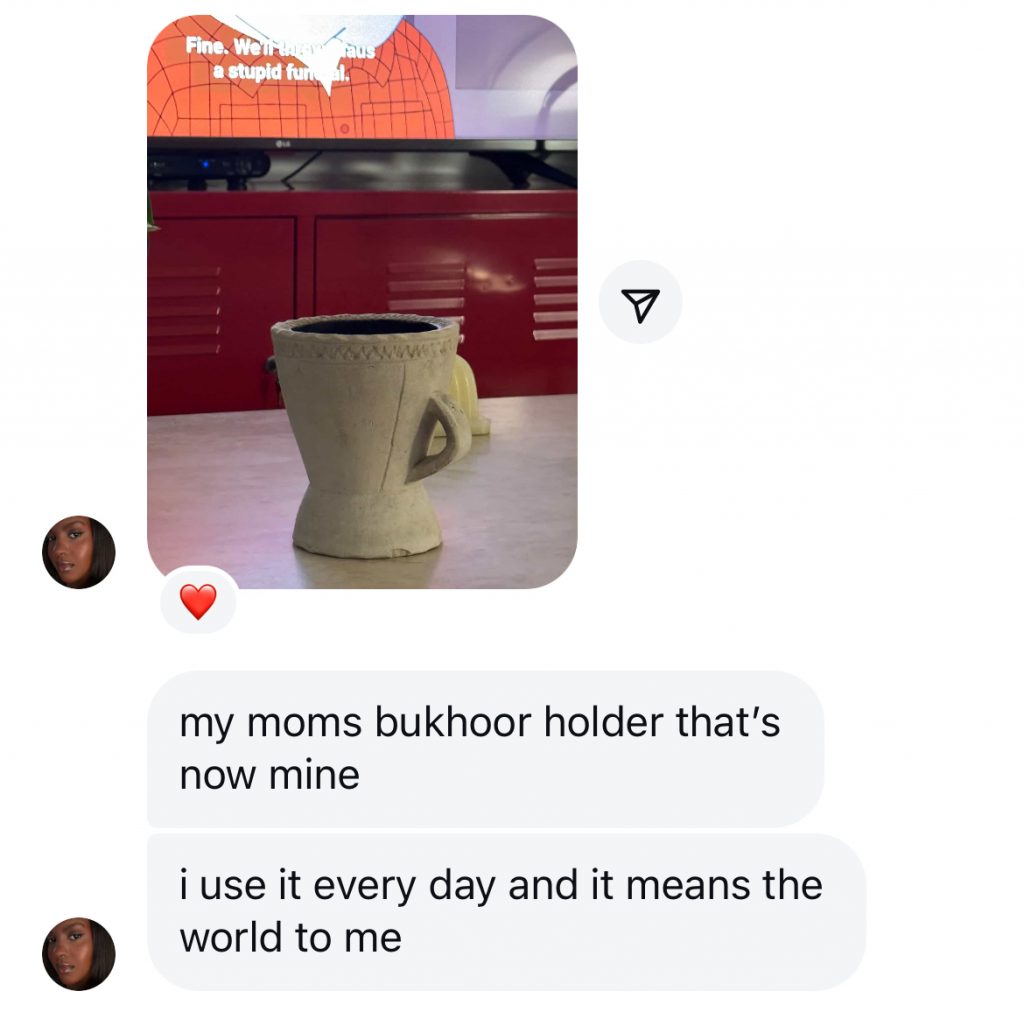
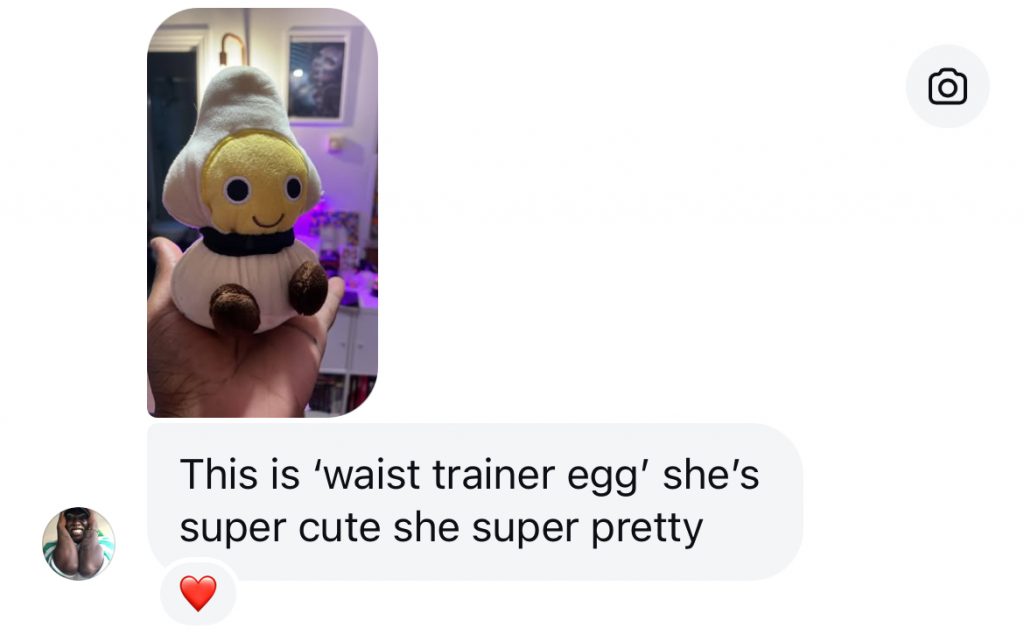
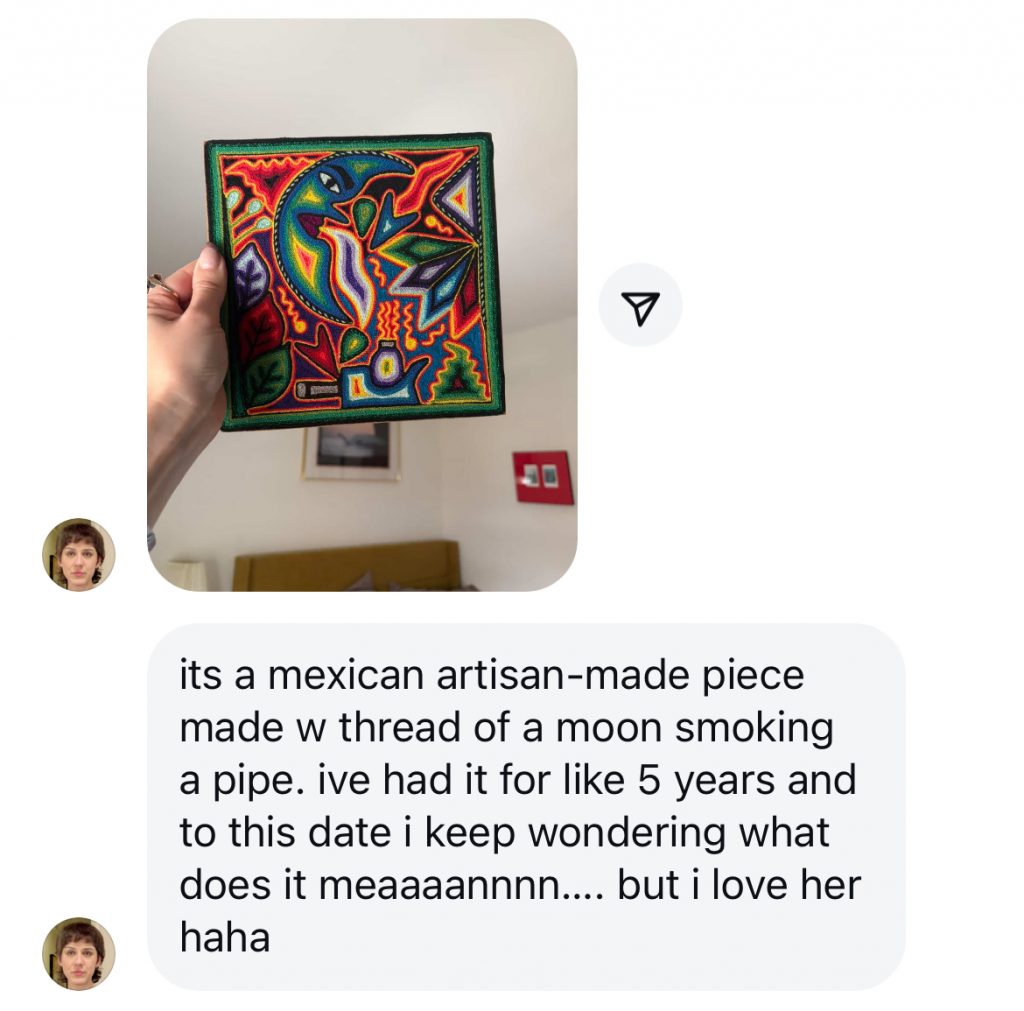
I recieved some responses that related to items of personal affection. While these objects did lack responses regarding items based on memes, it ended up proving that humor isn’t always portable. It was insightful to see the relationships that people had with objects of admiration. As you can see in the examples below, some participants shared objects that felt funny or sentimately without being able to explain why. The attachment might not come from a meme itself, but from the feeling of recognition.
I did recieve one response that fit the context of what I was looking for with this intervention. A framed portrait of actor Jacob Elordi’s feet. As you can see in the screengrabs below, it is clear that this artefact is layered with irony and humor. There is a chain of meaning going through it, which went from a celebrity association → a personal anecdote → an offline artefact that carries multiple meanings. The object itself might not be funny, but the story and context that surround it is.
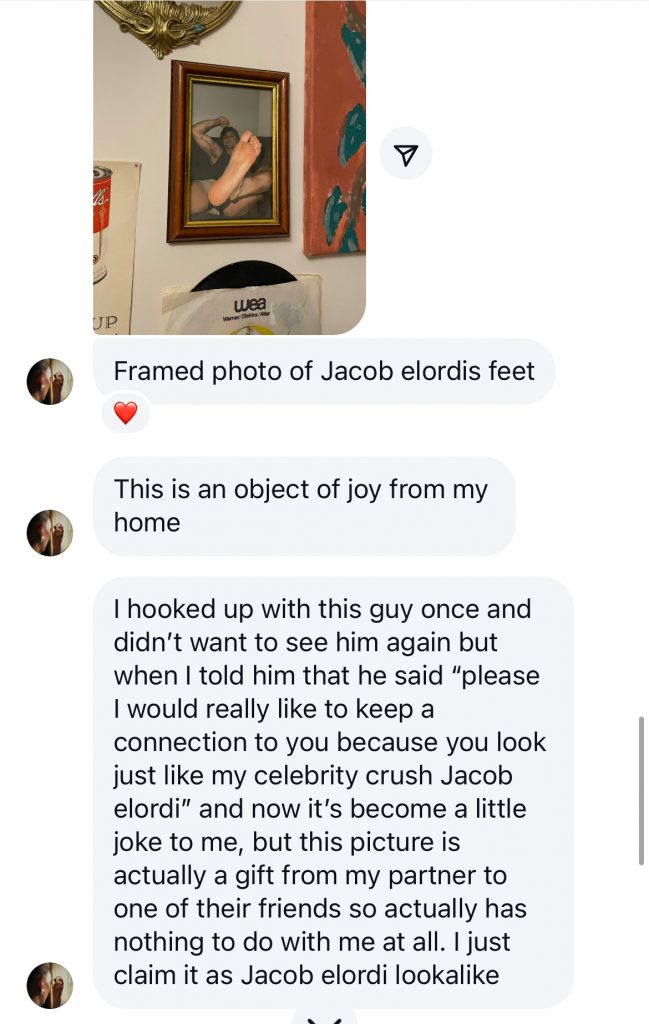
This brings up an insight into what makes post-millenial humor different. It thrives on inside jokes, meta-commentary, and a sense of shared understanding. Sometimes not getting a meme is part of a joke, something so random with no senseless direction ends up becoming meta, making it funny. The example above shows how the framed photo of Jacob Elordi’s feet has become an inside joke, making it a physical object that carries meaning only for those who understand the context behind it, ultimately making it an offline artefact. While it may not have been directly derived from the internet, it is still embedded and influenced in the post-millennial internet culture.
It is important to bring up why content and a shared sense of irony and self-awareness is necessary for these memes to be understood. You can see some jokes below that I derived from the internet that fit into the genre of senseless humor.

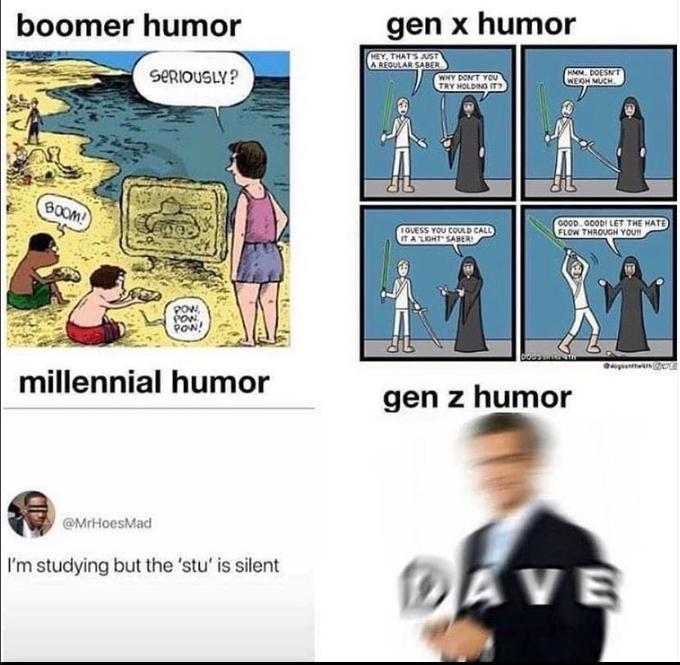
This type of humor begins to resist academic study as it constantly evolves and often is meant to exclude people who don’t belong in the subculture. The intervention turned out to be a gateway to asking why humor and meme culture can be hard to translate into action, mainly because Gen Z’s humor thrives on the absurdity we discussed.
References:
Katz, R. Ogilvie, S. Shaw, J. Woodhead, L. (2021) Gen Z, Explained: The Art of Living in a Digital Age. Chicago : The University of Chicago Press