
On Halloween, my friends and I decided to go to The Queen Adelaide, a vibrant queer venue known for its kitsch and camp decor, located in Hackney. Prior to attending the event, I kept my project in mind and whether I would be able to uncover anything that could help me. The general crowd that frequents The Queen Adelaide is local art and fashion students. The venue is regularly decorated with queer iconography and portraits of LGBTQ+ icons. Looking around, I thought it wouldn’t be a challenge to locate a meme or two since the crowd and environment matched the general audience of post-millennial online individuals.
As soon as we went to the downstairs portion, the walls were full of printed and taped memes. The initial reaction of my friends and me was to laugh, followed by familiarity and a sense of comfort. This directly correlates with the central idea that memes can transform physical spaces into places of belonging by reflecting shared humor and identity. While the space itself was not a meme or an offline artefact, the inclusion of these memes ultimately turned it into an extension of online culture. A space in which digital humor meets real-world connection, ultimately blurring the boundary between online and offline identity.
Some of the memes featured:
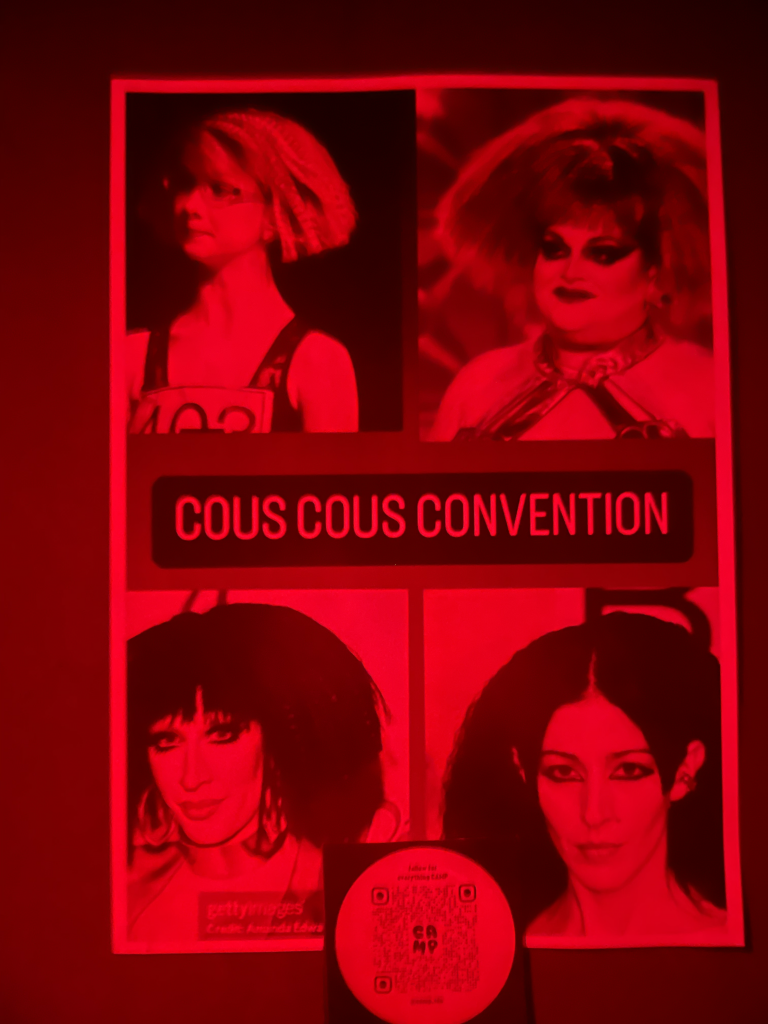
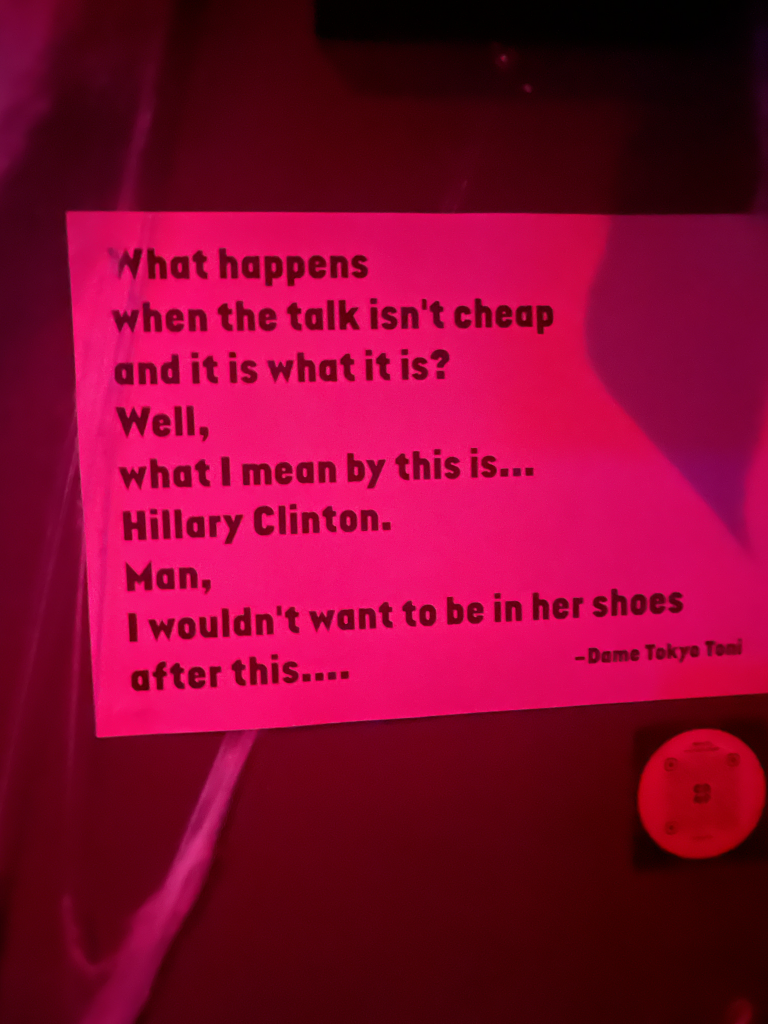
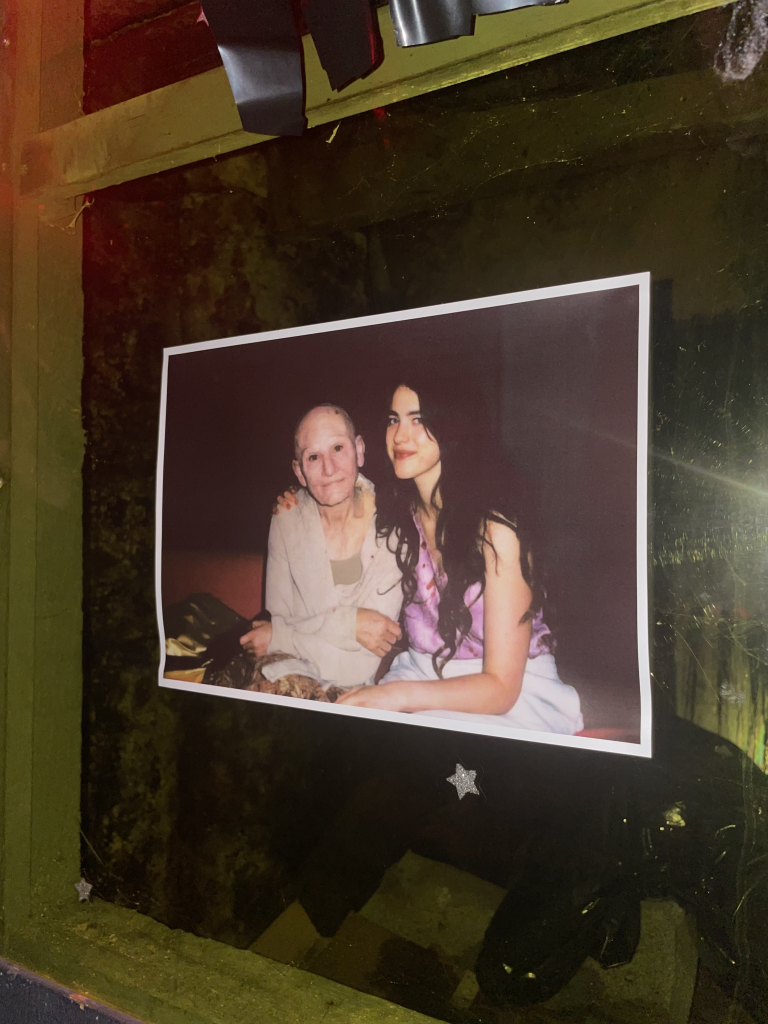
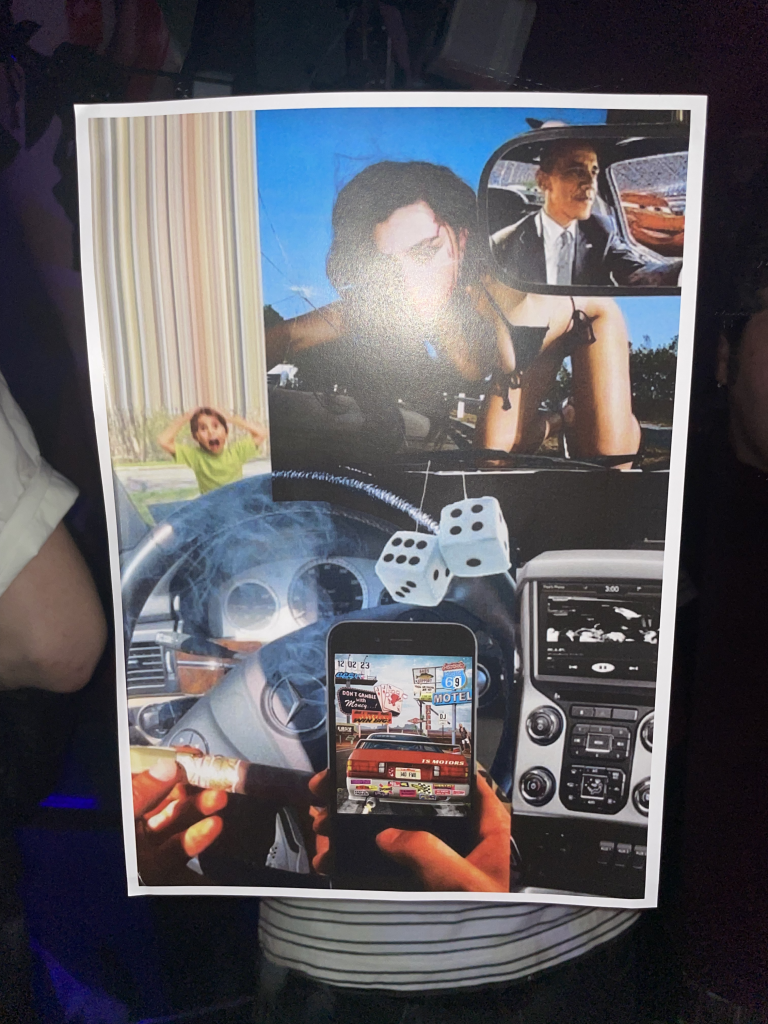
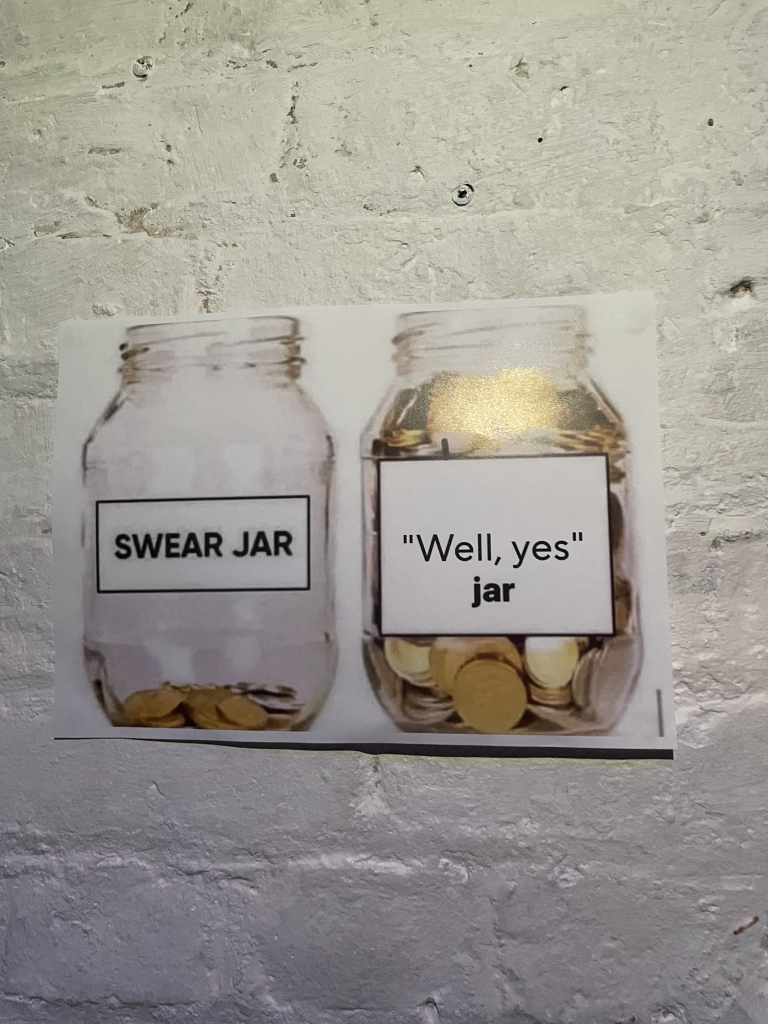
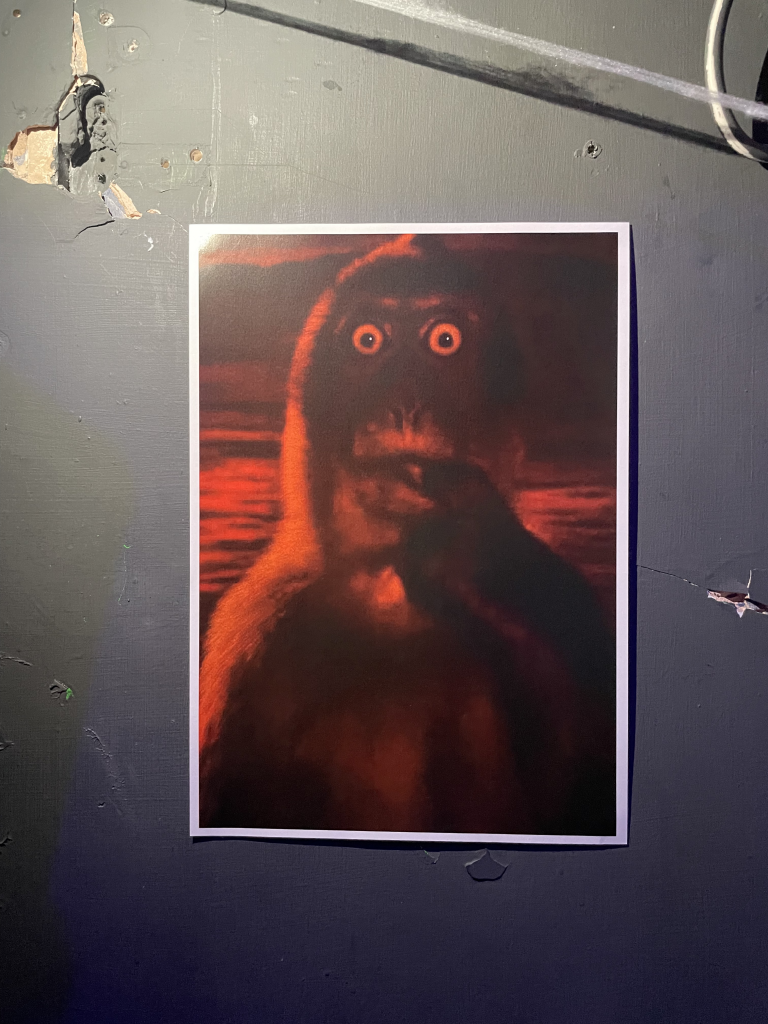
You can see in the memes above that there was a clear line of absurdity, irony, and self-aware humor that thrives in queer chronically online spaces. The memes share a sense of chaotic camp, mixing internet nonsense with niche celebrity references and surreal imagery, all rooted in humor that aims not to be understood by everyone.
It was joyous to see people interacting with the memes and taking photos with them. It was clear that seeing those memes in this space vs seeing them online did amplify their meaning and relevance, as they have now become a tool for The Queen Adelaide to let their patrons know that they belong in this space. This form of communication ultimately becomes validation in queer and niche communities, and it goes back to the idea that memes act as social shorthand.
Tying this into semiotics, or as I like to call it “se-meme-iotics”, the memes functioned as signs whos meaning was dependant on the shared cultural knowledge. Also going back to the Erin Meyers notion of high-context culture in which understanding the memes meant understanding the culture (2013). This experience made me realise how high-contect humor can build an immediate sense of belonging, even amongst strangers.
It is clear that memes left their digital origin and became part of the club’s physical environment. It also proved the trasnformartive power of meme culture in shaping physical spaces and emotional experiences. While they are online jokes, they are also tools for identity signalling and community building.
In The Queen Adelaide, the memes on the walls were not just jokes but rather a reminder that shared humor is a form of home and refuge. Pretty much becoming a physical environment that transformed into a space of belonging.
References:
Meyer, E. (2013) The Culture Map. New York : Public Affairs
Myers, O. (2018) So you’ve never been to… The Queen Adelaide. Available at: https://www.timeout.com/london/lgbt/so-youve-never-been-to-the-queen-adelaide [Accessed Sunday November 2 2025]